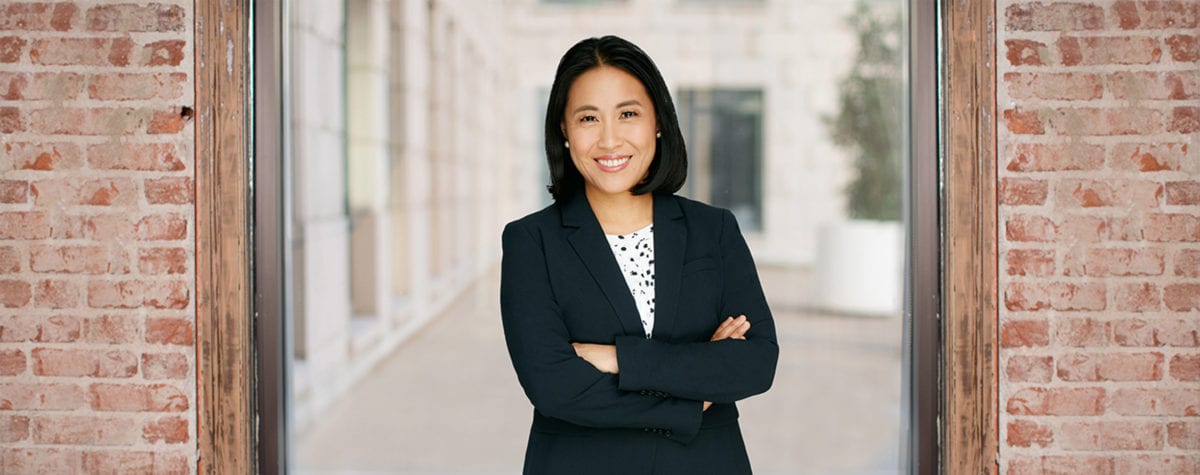
Chou Named Among Top White Collar Lawyers

The Daily Journal noted Ms. Chou’s former experience as a U.S. Attorney and her relationships with local counsel and prosecutors as key to scoring some notable victories, including securing a declination for Southern California Edison in the criminal investigation of the deaths from the wildfires; leading the defense of – and securing a unique plea agreement – one of the highest profile criminal defendants in the “Varsity Blues” college admissions case; securing a presidential pardon for an elderly immigrant accused of 50 counts of defrauding elderly victim,

Ms. Chou will also be leading the jury trial of former Outcome Health CEO Rishi Shah, once one of the richest men in Chicago, on charges that he ran a $1 billion fraud scheme.

The list recognizes the very best white collar attorneys in California. Ms. Chou is one of 25 selected.

Click here to read the full profile.

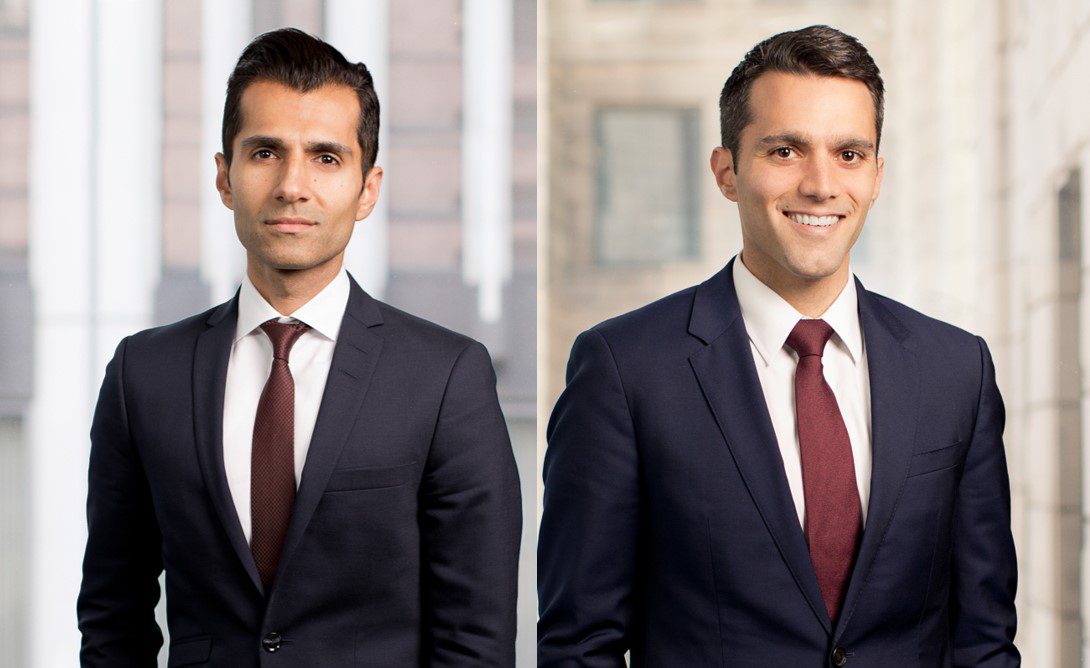
Todisco Named Rising Star of the Year

The LABJ – in connection with their Leaders in Law feature recognized Mr. Todisco as a “promising young trial lawyer,” noting his three trial wins and three appellate victories. Editors went on to say that “Mr. Todisco is the rare effective trial lawyer who is also a gifted writer” … “clients prize his robust and balanced skills.”

The article noted Mr. Todisco’s recent wins for PricewaterhouseCoopers in a federal whistleblower trial and for the California Institute of Technology after a four-week jury trial in a $65 million+ tortious interference and whistleblower case.

The 11th annual special event honored the leading general counsels and firm-based attorneys in the Los Angeles area for 2021.

Click here to view full profile.

Kaba and Todisco Honored as Leaders in Law Nominees

Mr. Kaba and Mr. Todisco will be honored during the 11th annual Leaders in Law virtual event on November 17, 2021.

Attorneys who specialize in litigation, real estate, IP, labor & employment, bankruptcy, and corporate excellence, in general, will be honored, as will in-house counsel professionals from organizations of various sizes and industries. Honorees will be recognized for their exceptional legal skills and achievements across the full spectrum of responsibility, exemplary leadership, and contributions to the Los Angeles community at large.

All finalists can be viewed here.

Hueston Hennigan Receives National Rankings by U.S. News – Best Lawyers®

National and Metropolitan rankings include:
Bet-the-Company Litigation
Commercial Litigation
Criminal Defense: White Collar
Litigation – Intellectual Property
Litigation – Securities

In addition, a number of lawyers were also recognized by Best Lawyers in America in the rankings released earlier in the year.

Best Lawyers include:
Marshall A. Camp
Vicki Chou
Douglas J. Dixon
Brian J. Hennigan
John C. Hueston
Moez M. Kaba
Robert N. Klieger
Alison L. Plessman

Best Lawyers: One to Watch include:
Michael Acquah
Brittani Jackson
Lauren McGrory Johnson
Sourabh Mishra
Rajan Trehan


The 2022 rankings incorporate more than 8.2 million evaluations of more than 115,000 individual leading lawyers from more than 22,000 firms.

Trial Victory for ClearOne in Long-Running Legal Dispute with Shure

“The jury deliberated for less than two hours before returning a verdict in our favor,” said Doug Dixon. “We feel privileged to have defended ClearOne in this very significant matter. ClearOne knew it was right, stood up for itself, and was vindicated.”

The litigation between ClearOne and Shure began in 2017 in federal court in Illinois, where ClearOne accuses Shure of infringing several patents. After a string of losses in Illinois, Shure expanded the parties’ litigation in 2019 to the District of Delaware, where it filed claims for patent infringement, including of a design patent, and trade libel against ClearOne. In May 2020 and January 2021, we secured an important pair of wins for ClearOne, defeating Shure’s requests first for a temporary restraining order and then a preliminary injunction, allowing ClearOne to continue selling its ground-breaking audio-conferencing products. In addition to defeating Shure’s requests for preliminary injunctive relief, we also obtained a stay of the proceedings with respect to the only other asserted patent.  Then, on the eve of trial, Shure dropped its trade libel claims.  This trial verdict disposed of Shure’s claims, other than a stayed patent claim, while ClearOne maintains false advertising claims in Delaware, to be tried at a later date, along with its original claims in Illinois.

ClearOne is a global company that designs and develops conferencing, collaboration, and networked streaming devices. Its customers have included Boeing, Toyota, Netflix and Exxon.

The Hueston Hennigan team includes Doug Dixon, Christy Rayburn, Christine Woodin, Sourabh Mishra, Michael Acquah, Neil Anderson, Dan Sheehan, and Joseph Aronsohn.

Media Coverage
“Jury Says Microphone Co. Shure’s Patent Invalid After Trial,” Law360, November 5, 2021.

“ClearOne Beats Rival Microphone Maker’s Design Patent Claims,” Bloomberg Law, November 4, 2021.

Law360: How Hueston Hennigan Notched A Landmark Opioid Trial Win

Endo has taken a bruising recently in major discovery fights that have sometimes overshadowed its actual trial defense. But all four companies can count Monday’s ruling by Orange County Superior Court Judge Peter J. Wilson as a major entry in the win column.

The plaintiffs, three counties and one city, claimed the companies misled the public and doctors about the safety of prescription opioids, needlessly addicting patients and ultimately burdening public systems. They were not immediately available for comment.

With other opioid trials in West Virginia, New York and Ohio awaiting decisions, and more trials set for next year, lead Endo trial lawyers John Hueston and Moez Kaba of Hueston Hennigan LLP spoke with Law360 about how they helped secure the California win. This interview has been edited for length and clarity.

What was your strategy going into the trial?

Kaba: Before the trial, too much was getting lost in the story of the opioid epidemic, and there wasn’t enough focus on the actual burden to prove the claim. We were very focused on getting the truth out — frankly, in large part through the people’s own witnesses.

What were some of the most important or key cross-examinations during the plaintiffs’ case, from your perspective?

Hueston: One was Stanford professor [Anna] Lembke. Dr. Lembke was presented as the lead voice by the plaintiffs for their case trying to establish misstatements that drove the crisis in California.

And through methodical undermining, through Moez’s cross-examination, of each of these alleged statements, showing that in many cases the statements she said we made were not made by us or that she simply construed the statement to be something else, I think it was a true turning point.

Can you give an example of one of those statements?

Kaba: Sure. One of the things that Dr. Lembke claimed, for example, was that it was false or misleading to suggest that opioids can improve the function of people who take them. And we had her admit very clearly, very plainly, that not just the [U.S. Food and Drug Administration] but the state of California itself in its own laws acknowledges that opioid medications when properly prescribed do, in fact, improve function.

The judge would often stop the trial and hold long discussions about evidence and give hints about what he wanted to see or what was working or not working. Were there specific times when those discussions helped you figure out what directions to go in?

Hueston: Our overall strategy from the start was to try to move the focus of the trial beyond the question of “Is there an opioid crisis,” which everyone largely conceded from the get-go, and to focus in singularly on “Where are the false statements?”

There was risk with that approach because we weren’t sure coming into the trial that the judge agreed with the legal theory that proof of false statements had to undergird effectively all the claims of the case. And when the judge began challenging the plaintiffs on that very point and suggesting that, in fact, that was likely determinative, that I think helped confirm and further focus our presentations.

By the final closing argument, we had reduced the plaintiffs’ case to a mere 11 [Endo] documents with alleged false statements, out of millions of pages produced. So I think his discussion and focus of the parties on that aspect of the law was very helpful — frankly, to both sides, although I think the plaintiffs largely brushed off [that evidence] to their detriment.

Kaba: It’s an extraordinarily methodical order. He goes through alleged statement after alleged statement and reaches the findings that these are not false statements.

There’s another part of his order where he says that there’s no causation, which was another big part of our case. In the examination that John did of our economist, we proved up that there is no causation — even though it wasn’t our burden in the first place. It was the people’s burden to prove up causation. But we did it anyway through Dr. [Justin] McCrary, a professor from Columbia Law School.

But we did hear during the trial at times that there isn’t a massive crisis in these four jurisdictions, like there is elsewhere in the country. That argument hasn’t been used in other major opioid trials. Did it contribute to the success you had here?

Hueston: We certainly wanted to make sure that a case about the opioid epidemic in California actually related to California. And what we wanted to do was to anticipate and blunt the attack from plaintiffs that California is like Appalachia and Tennessee, or some of the other notorious hot spots. And so we did contextualize that for the judge.

But then we quickly moved beyond that. Because, again, by lingering too long on that issue we were concerned that would play into the hands of the plaintiffs, who wanted to really advance a simplistic case of stating, “Your Honor, all you need to find is an opioid epidemic or crisis and then find that the companies knew of the risk of opioids and simply promoted that, and that is sufficient to find a nuisance.” And of course, as the judge pushed back on that throughout the trial and ultimately found in the order, that was a legally insufficient framework for their nuisance theory.

Kaba: The notion of the opioid crisis was one that actually wasn’t really in dispute at all during the trial. The dispute in the trial was, in these jurisdictions, is this a crisis of prescription opioid medications? And you saw during the trial, repeatedly, us making the point that what has led to more emergency department visits, more bad outcomes, has been the use of heroin, has been the use of fentanyl, not the use of prescription opioids. There is a real problem of drug abuse, but that’s not the question for this trial.

Was there a moment where you felt the tide turning? The judge telegraphed a bit at arguments on Sept. 30 how he was leaning, but before that, was there a moment where you felt as though things were on your side?

Kaba: Oh, no. I think we went into trial every day and we thought, “We’ve got to go out there, we have to be the best lawyers in the room, we have to put forward the best evidence.” John has this saying, which is: “We need to go out, and we need to win every day.” And that was our attitude for three months.

Hueston: You’ll recall at the end of the plaintiffs’ case the judge invited argument. And we all made presentations, and we were hopeful that the judge would tip his hand. At one point he said, “I’m going to come back in a couple of hours,” and we thought that he was going to render some sort of substantive decision or give guidance.

But he expressly declined to do so, which caused us some angst and uncertainty. But it’s a credit to him as a judge; I think he wanted to remain fair, balanced and beyond reproach as the adjudicator while the evidence was still coming in.

When the decision came down Monday, was there anything the judge said that specifically echoed an argument you had made at trial?

Kaba: At one point the judge quotes specifically an admission that I got from the very first witness at trial, which was the people’s historian, Dr. [David] Herzberg, who admitted on the stand — the very first person to testify for the people — that there are, even according to him, any number of potential causes for the opioid crisis. And the judge was given no basis to figure out, well, who caused what, where, when, how and why? And he cites that in his order.

How does it feel to not just get a win, but get a win for Endo, which has been defending itself in other opioid cases on claims that it withheld critical evidence?

Hueston: We pride ourselves in taking on the toughest cases from clients who are literally in a bet-the-company situation. And nothing could better define that now than, I think, for Endo — and, frankly, for a number of the other pharmaceutical manufacturers.

We worked very hard with the Endo in-house team, and they were really part of the strategy and the work on this case as well, to be able to push aside the noise and the politics and the hype around trying to find liability for manufacturers and to winnow it down to a focused case on the facts. To be able to do that and to land that for a deserving client is really all that we could have asked for and what you dream about in terms of the firm’s mission.

Kaba: Endo is not actually selling its Opana products anymore; it stopped marketing and stopped selling them, and this is a company that has manufactured and sold and developed some really extraordinary other pharmaceutical medications. It is important that the company not be defined by its status as a defendant in opioid litigation. It’s done a lot of good in terms of medical development and progress.

Is there anything else that stood out in the trial?

Kaba: I do think it’s worth mentioning that the trial and the work that was put into it truly was a team effort for us — not just, obviously, with our client, but also with the other partners and associates that worked with us who really were extraordinarily committed and working hard every day. It is hard in the middle of a pandemic to show up to the office seven days a week for three months.

Hueston: There is another item that we haven’t fully addressed. It was critical to our strategy to ensure that the voices that are in support of proper pain management were heard, that pain management doctors who could help describe the life crises of people who simply have inadequate treatment of pain and the legislative processes behind that to protect that was key to balancing the narrative. And that approach succeeded, and it’s shown in the judge’s opinion as he sets forth not only the understanding of that balance by the FDA and the federal government but how that is enshrined specifically in California in, for instance, the Patients’ Bill of Rights. We thought it was very important to make sure that that sort of emotional arc, which is typically possessed by the plaintiff in these sorts of cases, was balanced here by the defense.

Looking ahead, are there more opioid trials in your future?

Hueston: Well, we have another case in federal court set in April in San Francisco, and then there are yet other cases that we have been invited to try. And we’re focused on fitting that within our trial schedule for 2022.

–Additional reporting by Jeff Overley and Emily Field. Editing by Orlando Lorenzo.

How Hueston Hennigan Notched A Landmark Opioid Trial Win


The Hueston Hennigan team was led by John Hueston and Moez Kaba, and included Marshall Camp, Mike Purpura, Padraic Foran, Tom King, Samantha Schnier, Michael Todisco, David Sarfati, Josh Burk, Karen Ding, and Stephen Mayer.
Hueston Hennigan Named One of the “Most Feared Law Firms in Litigation” in U.S.: “Fearless Nature, Uber Urgent, Relentless, and Strategically Aggressive.”

Hueston Hennigan joins a list of the most elite law firms across the country. Seasoned general counsel and legal decision makers point to four key attributes of the Firm: “fearless nature, uber urgent, relentless, and strategically aggressive.”

BTI Litigation Outlook 2022 is based solely on in-depth telephone interviews with leading legal decision makers. This research is independent and unbiased —no law firm or organization other than BTI sponsors this study. Each year, BTI reaches out to a strategically designed group of top legal decision makers at large organizations with $1 billion or more in revenue. BTI targets the decision makers in the industries who spend the most on legal affairs as well as thought leaders and innovative Chief Legal Officers. The survey also includes Chief Legal Operating Officers and business executives who hire and influence the selection and hiring of law firms.

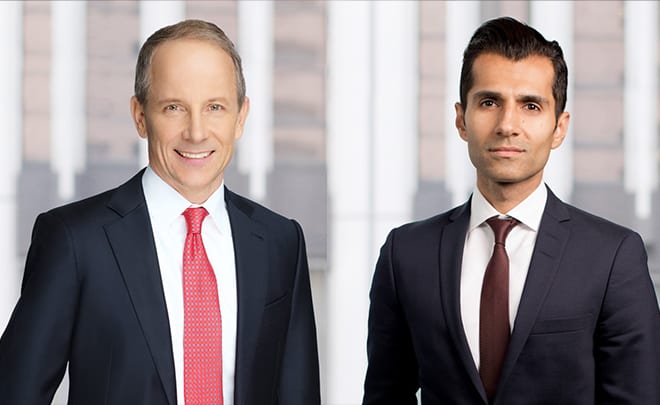
Hueston and Kaba Named Top 100 Trial Lawyers in America

John Hueston was acclaimed as “a trial trailblazer who has carved himself an enviable position even among others in the elite trial lawyer circuit.”

While Moez Kaba, “the youngest appointee to this prestigious list by some distance,” was praised as having “staked himself a position as another of the firm’s lead trial counsel on some of the firm’s most high-stakes disputes.”

The firm also earned spots on the coveted list of “Top Boutiques” and “Top 20 Trial Firms” in the United States, noting “a multi-year streak of trial wins.” In addition, Benchmark analysis declares: Hueston Hennigan’s “mission of putting a premium on trial work, a mission that has been fulfilled with rapid momentum…”

Hueston Hennigan also earned national – and State of California – tier 1 rankings in the General Commercial, White Collar, Securities and Entertainment practice areas.

Benchmark Litigation is the definitive guide to America’s leading litigation law firms and lawyers. Research is conducted through extensive interviews with litigators, dispute resolution specialists and their clients to identify the leading litigators and firms. During these interviews, we examine recent casework handled by law firms and ask individual litigators to provide their professional opinions on peers and practitioners within their jurisdiction or practice area.

Appellate Victory for Caltech

“This is a significant victory for Caltech,” said Joe Reiter, who argued the appeal. “The court thoroughly rejected Dr. Roumi’s arguments on appeal and reaffirmed our trial victory in its entirety.”

After just a few hours of jury deliberation in June 2019, the Hueston Hennigan team, co-led by John Hueston and Moez Kaba, emerged victorious in a month-long trial. The jury unanimously found for Caltech on Dr. Roumi’s claims that the school had retaliated against him. Hueston Hennigan had previously obtained dismissal of claims of tortious interference. Dr. Roumi, who sought nearly $100 million in damages, was hired to work on a project funded by the Department of Energy, but ultimately failed.

The Hueston Hennigan team included John Hueston, Moez Kaba, Joe Reiter, and Michael Todisco.

“Massively Successful” Hueston Hennigan Named Top National Trial Firm During a Multi-Year Streak of Trial Wins

Hueston Hennigan once again tops the Benchmark Litigation rankings, earning a spot on the coveted list of “Top Boutiques” and “Top 20 Trial Firms” in the United States.

Benchmark analysis noted Hueston Hennigan “is massively successful” “with a client base [that] is remarkably diverse … with very little repeat business and virtually no ‘routine’ cases.” Editors noted “a multi-year streak of trial wins” observing “these cases are just ‘WOW!’ factor all the way.” “Even by [Hueston Hennigan’s] usual standards of trial breeding, this is exceptional.”

“Hueston Hennigan doesn’t do the ‘cookie-cutter.’ They do really cool, cutting-edge work,” declared a peer, who goes on to confide, “I admit it makes me jealous, and I’m sure I’m not alone!”

Benchmark recognized partners, John Hueston and Moez Kaba, as two of the Top 100 Trial Lawyers in the Country and two of the Top 20 Trial Lawyers in California. John Hueston was acclaimed as “a trial trailblazer who has carved himself an enviable position even among others in the elite trial lawyer circuit.” While Moez Kaba, “the youngest appointee to this prestigious list by some distance,” was praised as having “staked himself a position as another of the firm’s lead trial counsel on some of the firm’s most high-stakes disputes.”

Benchmark also praised multiple additional Hueston Hennigan lawyers. Doug Dixon, for example, recognized as a Litigation Star, is “a spectacular lawyer” who shines on “tough cases.” Marshall Camp, Rob Klieger, and Brian Hennigan were likewise recognized as Litigation Stars. A peer noted, Future Stars and Top Lawyers Under 40, Allison Libeu, Vicki Chou, and Christy Rayburn, “have really positioned themselves as key counsel on a number of issues.”

Hueston Hennigan lawyers’ individual recognitions are summarized below:

Marshall A. Camp, Litigation Star
Vicki Chou, 40 & Under Hot List, Future Star
Douglas J. Dixon, Litigation Star
Brian Hennigan, National Star (White Collar Crime), Litigation Star
John C. Hueston, Top 100 Trial Lawyer, Top 20 California Trial Lawyer, National Star (White Collar Crime and General Commercial Litigation), Litigation Star
Moez M. Kaba, Top 100 Trial Lawyer, Top 20 California Trial Lawyer, 40 & Under Hot List, Litigation Star
Robert N. Klieger, Litigation Star
Allison Libeu, 40 & Under Hot List, Future Star
Christy Rayburn, 40 & Under Hot List

Hueston Hennigan also earned national – and State of California – tier 1 rankings in the General Commercial, White Collar, Securities and Entertainment practice areas.

Benchmark Litigation is the definitive guide to America’s leading litigation law firms and lawyers. Research is conducted through extensive interviews with litigators, dispute resolution specialists and their clients to identify the leading litigators and firms. During these interviews, we examine recent casework handled by law firms and ask individual litigators to provide their professional opinions on peers and practitioners within their jurisdiction or practice area.